
A child’s first dental visit can feel overwhelming for many parents. It is normal to worry about how your child will react, whether they may feel scared, or if the visit might be uncomfortable. For some families, even thinking about walking into a dental clinic for the first time with a young child can feel stressful.
Early dental care is an important milestone in your child’s overall health. Just like regular visits to a GP help monitor physical growth, early dental visits help protect your child’s teeth, gums, and oral development from a young age. At Clyde North Dental Studio, children’s dental care focuses on gentle prevention and building trust from the very first visit.
This blog guide helps parents understand when to book their child’s first dental appointment, what happens during the visit, and how to prepare your child for a calm and positive experience. Children’s dental visits are gentle, short, and designed to build confidence rather than fear. With the right approach, your child’s first visit can be relaxed, reassuring, and even enjoyable.
Why a Child’s First Dental Visit Matters
A child’s first dental visit plays a key role in protecting their oral health as they grow. Baby teeth may be temporary, but they are very important for chewing, speaking, and guiding adult teeth into the correct position. Early dental visits allow dentists to monitor how teeth and gums are developing. This helps identify small issues before they become bigger problems that may require more treatment later on.
Tooth decay is one of the most common health problems in children. Early dental check-ups help prevent decay, gum problems, and infections before pain begins. Dentists can also give parents helpful advice on brushing, fluoride use, and diet to support healthy teeth at home. Starting dental visits early helps children feel comfortable with dental care. When visits are calm and positive from a young age, children are more likely to feel confident and relaxed at future appointments.
When Should Your Child Have Their First Dental Visit?
In Australia, it is recommended that children have their first dental visit by the age of one, or when their first tooth appears—whichever comes first. This early visit helps ensure your child’s oral development is on track. Waiting until your child feels pain or has visible problems is not ideal. By the time pain appears, tooth decay or gum issues may already be advanced. Early visits focus on prevention, not treatment.
Seeing a dentist early gives parents professional guidance on caring for baby teeth, managing teething, and preventing dental problems before they start. This proactive approach supports long-term oral health and reduces the need for more complex dental care later.
What Happens During a Child’s First Dental Appointment?
A child’s first dental appointment is usually short, gentle, and relaxed. The main goal is to introduce your child to the dental environment and build trust.
Gentle Examination of Teeth and Gums
The dentist will gently examine your child’s teeth and gums. This includes checking how teeth are coming through (tooth eruption) and making sure gums look healthy. The dentist may look for early signs of tooth decay, changes in enamel, or developmental concerns. At this stage, examinations are visual and non-invasive. There are no drills or uncomfortable tools used during a first visit.
Oral Health Advice for Parents
A large part of the first dental visit focuses on education for parents. Dentists provide simple, practical advice to help care for your child’s teeth at home.
This may include guidance on:
- Cleaning gums with a soft cloth before teeth appear
- Brushing twice daily using a rice-grain smear of toothpaste
- Choosing age-appropriate toothbrushes and toothpaste
- Safe fluoride use for children
- Reducing sugary foods and drinks
- Encouraging water and healthy food choices
Creating a Positive First Experience
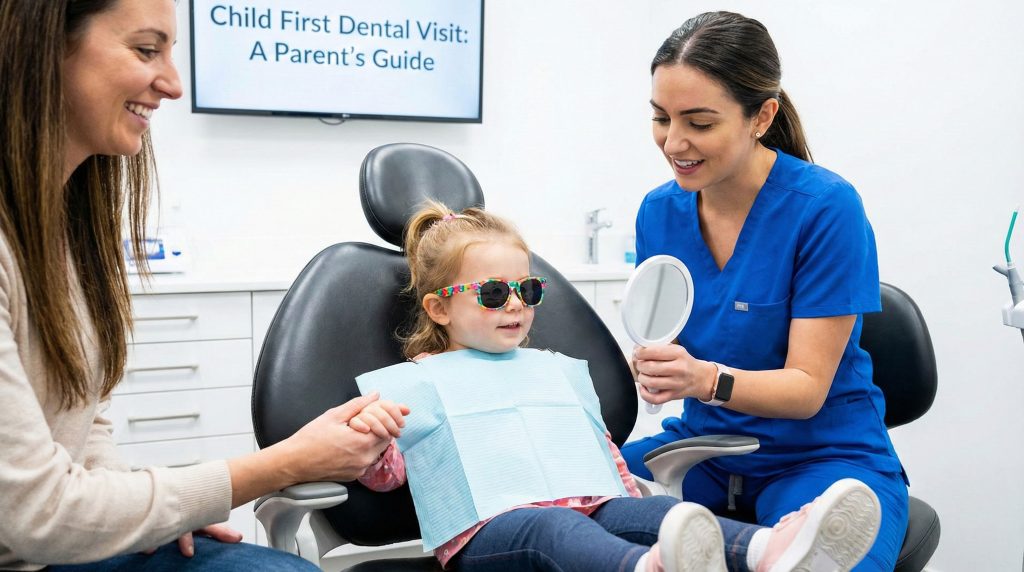
Dentists use a child-friendly approach to make the visit feel safe and welcoming. This may include friendly conversations, showing tools in a playful way, and allowing children to explore at their own pace. Young children may sit on a parent’s lap during the examination, which helps them feel secure. The visit is pressure-free and designed to create positive memories, not fear.
How Parents Can Prepare Their Child for Their First Dental Visit
Talking Positively About the Dentist
How parents talk about the dentist can shape how a child feels about the visit. Use simple, reassuring language when explaining where they are going. Avoid words that sound scary or suggest pain. Instead, describe the dentist as someone who helps keep teeth strong and healthy. A calm explanation helps children feel safe and confident.
Choosing the Best Time for the Appointment
Book the appointment at a time when your child is well-rested and calm. Avoid nap times or busy parts of the day when your child may feel tired or overwhelmed. A relaxed child is more likely to have a smooth and positive dental experience.
Bringing Comfort Items
Bringing a favourite toy, blanket, or comfort item can help your child feel secure in a new environment. Familiar items provide reassurance and make the clinic feel less unfamiliar. Dentists welcome comfort items and understand how important they are for helping children feel at ease.
What Makes Children’s Dental Care Different?
Children’s dental care is designed specifically for young patients, with a focus on comfort, safety, and confidence.
Child-Friendly Clinic Environment
Dental clinics that treat children often use bright colours, playful decorations, and child-sized furniture. These features help children feel relaxed and reduce anxiety. A friendly environment helps children associate dental visits with positive experiences rather than fear.
Special Equipment Designed for Small Mouths
Dentists use small, gentle tools designed for children’s mouths. These tools allow examinations to be quick and comfortable. Using the right equipment helps prevent discomfort and makes it easier for children to stay relaxed during the visit.
Parental Involvement During the Examination
Parents are encouraged to stay close during their child’s appointment. Sitting nearby, holding a child’s hand, or offering reassurance can make a big difference. This teamwork helps build trust and supports a calm experience for both the child and parent.
Common Concerns Parents Have About the First Dental Visit
Parents may worry about their kids’ first dental visit, but most fears are easy to ease. Here’s the straight talk on top fears.
Is My Child Too Young to See a Dentist?
It is good to start at age one or when their first tooth grows. Early dental checks catch small issues and prevent them from getting worse. The longer your waits, the higher risks of tooth decay! Starting early can build good dental habits for long-term oral health.
What If My Child Cries or Becomes Upset?
It is normal for children to cry or feel unsure during their first visit. Dentists are trained to work with young children and understand these reactions. If a child becomes upset, the dentist may pause, offer reassurance, or shorten the visit. There is never pressure to continue if a child is overwhelmed.
Will the Visit Be Painful?
First trips are not painful—no drills or pokes, just looks and counts. Dentists use gentle hands and fun tools for comfy checks. It’s designed for kids and building trust.
How Dentists Manage Anxious or Nervous Children
They create a chill zone with play or tell stories. Parents stay close for reassurance, and breaks are fine anytime. This kid-first approach eases nerves fast, so all kids feel great.
Building Healthy Dental Habits After the First Visit
Importance of Regular Dental Check-Ups
Regular dental check-ups help monitor your child’s oral health and prevent problems before they start. Most children benefit from visits every six months, although some may need more frequent reviews. Routine visits support strong teeth, healthy gums, and fewer dental emergencies.
Establishing Daily Brushing Routines at Home
Children should brush their teeth twice a day using a soft toothbrush and age-appropriate toothpaste. Parents should help with brushing until children have the skills to brush effectively on their own. Spitting out toothpaste without rinsing allows fluoride to protect the teeth for longer.
Encouraging Children to Take Part in Caring for Their Teeth
Allowing children to hold their toothbrush and practise brushing helps them feel involved. Parents can guide and assist while offering encouragement and praise. Positive reinforcement helps children develop lifelong oral hygiene habits.
Frequently Asked Questions
What Age Should My Child First See a Dentist?
Book the first visit soon after the first tooth appears. By their first birthday.
How Often Should Children Visit the Dentist?
Most children benefit from dental visits every six months, though some may need more frequent reviews.
What If My Child Is Scared of the Dentist?
Children’s dental visits are gentle, short, and designed to reduce fear. Dentists use child-friendly techniques to help children feel safe and supported.
Do Baby Teeth Really Need Dental Care?
Yes. Baby teeth guide adult teeth, support speech and eating, and help prevent infections. Early dental care protects your child’s long-term oral health.