
Ever bitten into something a bit too hard, or had a little mishap, and felt that tell-tale rough edge in your mouth? Yep, you guessed it – a chipped tooth. It can be a bit of a shock, right? Suddenly, your smooth, pearly white teeth no longer feel so pearly white.
But don’t you fret! A chipped tooth isn’t the end of the world, and fixing it is often quicker and easier than you might think. This blog is all about understanding why teeth chip, how to spot it, and, more importantly, all the fantastic ways your dentist can help you get your smile back in tip-top shape.
We’ll be talking all things chipped tooth repair, from quick fixes to long-lasting solutions.
What Causes a Chipped Tooth?
So, how do these little chips happen in the first place? It’s not always because you’re playing footy without a mouthguard (though that’s a good reason to wear one!). Our teeth are super strong, but they’re not invincible. Here are some of the common culprits:
- Biting Down on Hard Things: This is probably the most common one. Think about chomping on ice cubes, unpopped popcorn kernels, hard lollies, or even using your teeth to open bottles (definitely don’t do that!).
- Accidents and Injuries: A fall, a knock to the face during sports, or even a car accident can, unfortunately, lead to chipped teeth.
- Tooth Grinding (Bruxism): If you grind your teeth, especially at night, the constant pressure can wear down your enamel and make your teeth more prone to chipping.
- Large Fillings: Sometimes, a really big filling can weaken the remaining tooth structure, making it more susceptible to chipping, especially around the edges of the filling.
- Tooth Decay: When a tooth has a cavity, it weakens the enamel, making it much easier for a piece to break off.
- Weakened Enamel: Certain medical conditions, or even just acidic foods and drinks over time, can erode your tooth enamel, making it thinner and more vulnerable to chipping.
- Age: As we get older, our teeth can naturally become more brittle and prone to chips and cracks.
How to Identify a Chipped Tooth
Sometimes, a chipped tooth is obvious – you can see it in the mirror, or feel a sharp edge with your tongue. But other times, it might be a bit more subtle. Here’s what to look out for:
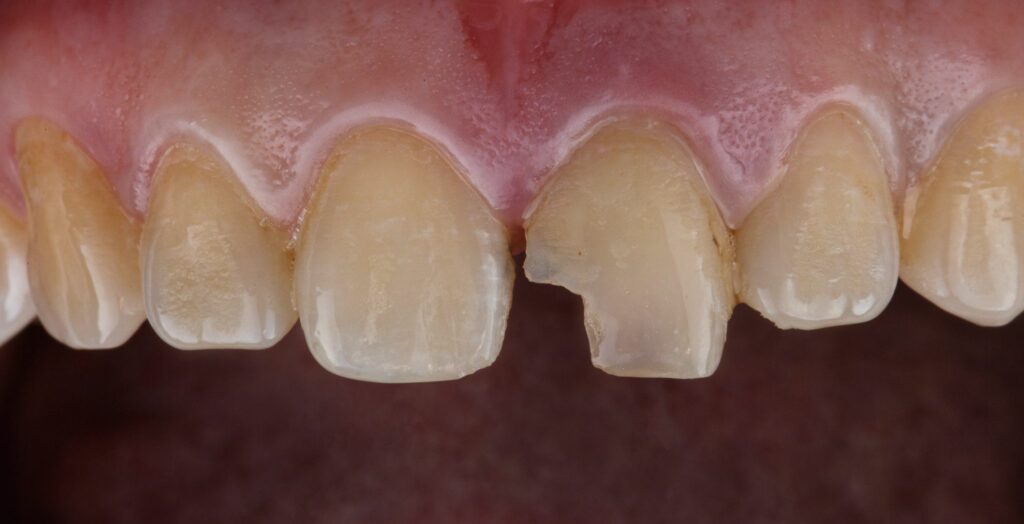
- Rough or Jagged Edge: The most common sign is a noticeable rough or sharp spot on your tooth that your tongue keeps finding.
- Sensitivity: You might feel a sudden sensitivity to hot or cold foods and drinks, or even to air. This happens if the chip exposes the inner layers of your tooth.
- Pain: Depending on the size and location of the chip, you might experience pain, especially when chewing. If the chip is deep and affects the nerve, the pain can be quite sharp.
- Visible Break: For larger chips, you’ll be able to see a piece of your tooth missing.
- Change in Bite: Sometimes, even a small chip can make your teeth feel “off” when you bite down.
If you suspect you have a chipped tooth, even if it’s not causing much pain, it’s always a good idea to get it checked out by a dentist.
Why You Should Repair a Chipped Tooth
You might think, “Oh, it’s just a small chip, I’ll deal with it later.” However, delaying chipped tooth treatment can lead to more significant issues in the future. Here’s why getting it fixed promptly is important:
- Preventing Further Damage: A small chip can easily become a bigger crack or break if left untreated, especially when you’re chewing.
- Protecting Against Decay: The exposed inner layers of your tooth are more vulnerable to bacteria and decay. A chip can be a direct pathway for cavities to form.
- Reducing Sensitivity and Pain: Fixing a Chipped Tooth can quickly alleviate any discomfort you’re experiencing from exposed nerves or dentin.
- Maintaining Your Oral Health: A damaged tooth can affect your bite, putting extra strain on other teeth or your jaw joint.
- Restoring Your Smile and Confidence: Let’s be honest, a chipped tooth can make you feel a bit self-conscious. Getting it repaired helps you feel good about your smile again.
Chipped Tooth Repair Options
Alright, this is the exciting part! Modern dentistry offers a range of fantastic solutions for tooth restoration for chips. The best option for you will depend on the size of the chip, its location, and your dentist’s assessment.
- Dental Bonding (The Quick Fix!)
- What it is: This is often the go-to for small to moderate chips, especially on front teeth. Your dentist uses a tooth-coloured composite resin (a fancy plastic material) that’s applied directly to the tooth.
- How it works: The tooth surface is lightly roughened, and a conditioning liquid is applied. Then, the resin is carefully sculpted onto the chipped area, matched to your tooth’s colour. A special light is used to harden the resin, and then it’s polished to look just like your natural tooth.
- Pros: It’s quick, often done in one visit, relatively inexpensive, and doesn’t require removing much (if any) of your natural tooth structure. This is a very common and effective dental bonding for chipped teeth solution.
- Cons: Not as durable as crowns or veneers, and can be stained over time, just like your natural teeth.
- Porcelain Veneers
- What it is: Veneers are custom-made, thin shells of porcelain that are bonded to the front surface of your tooth. They’re like a false fingernail for your tooth!
- How it works: A small amount of enamel is usually removed from the front of your tooth to make space for the veneer. Impressions are taken, and the veneer is custom-made in a dental lab. On your next visit, it’s permanently bonded to your tooth.
- Pros: Extremely natural-looking, very durable, stain-resistant, and can also improve the overall shape and colour of your tooth.
- Cons: More expensive than bonding, usually requires two visits, and the process is irreversible, as some enamel is removed.
- Dental Crowns (Caps)
- What it is: A crown is a tooth-shaped “cap” that completely covers your entire tooth, restoring its shape, size, strength, and appearance.
- How it works: Your dentist will reshape the chipped tooth to prepare it for the crown. Impressions are taken, and a custom crown (made of porcelain, ceramic, metal, or a combination) is created in a lab. You’ll usually wear a temporary crown while yours is being made. On your second visit, the permanent crown is cemented into place.
- Pros: Provides excellent strength and protection for severely chipped or weakened teeth, very durable, and long-lasting.
- Cons: More invasive than bonding or veneers, usually requires two visits, and is more expensive.
- Root Canal and Crown
- What it is: If the chip is very deep and extends into the pulp (the inner part of the tooth containing nerves and blood vessels), you might need a root canal first to remove the infected or damaged pulp, followed by a crown to protect the weakened tooth.
- Pros: Saves the tooth from extraction, relieves severe pain.
- Cons: More complex procedure, involves multiple visits.
- Tooth Extraction
- What it is: In very rare and severe cases, where the tooth is irreparably damaged (e.g., a chip extending far below the gum line or a complete fracture), extraction might be the only option. The tooth would then need to be replaced with an implant, bridge, or partial denture.
- Pros: Eliminates the damaged tooth and associated pain.
- Cons: Losing a natural tooth is always a last resort, and replacement options can be costly and involve further procedures.
Our dentist at Clyde North Dental Studio will discuss these options with you and help you choose the best chipped tooth repair solution for your specific situation. If you’re looking for a dentist Clyde North or a dentist Cranbourne, we will be able to guide you through the process.
What to Expect During the Chipped Tooth Repair Process
No matter which chipped tooth repair option you choose, here’s a general idea of what to expect when you visit your dentist:
- Examination: Our Clyde North dentist will first examine your chipped tooth and the surrounding area. We might take X-rays to check for damage to the roots or surrounding bone.
- Discussion of Options: We will explain the best repair options for you, discussing the pros and cons of each, including costs and what the procedure involves.
- Anaesthetic (if needed): For some procedures, especially if the chip is deep or close to the nerve, our dentist might numb the area with a local anaesthetic injection to ensure you don’t feel any pain.
- The Procedure: This will vary depending on the chosen repair. For bonding, it’s usually quite quick. For crowns or veneers, it will involve preparing the tooth and taking impressions.
- Post-Procedure Instructions: Our dentist will give you clear instructions on how to care for your newly repaired tooth.
The goal is always to make the process as comfortable and stress-free as possible, ensuring you get the best possible outcome for your tooth restoration for chips.
Aftercare for Chipped Tooth Repair
Once your chipped tooth is repaired, good aftercare is essential to ensure its longevity and your comfort.
- Mind Your Bite: For a few hours after a filling or bonding, avoid very hard or sticky foods. If you have a temporary crown, be gentle when chewing on that side.
- Oral Hygiene is Key: Continue brushing twice a day and flossing daily. Be gentle around the repaired area initially, but don’t avoid it.
- Avoid Chewing Hard Objects: This applies to everyone, but especially if you’ve had a chip! Steer clear of ice, hard lollies, and using your teeth as tools.
- Manage Grinding (if applicable): If you grind your teeth, your dentist might recommend a night guard to protect your new repair and your other teeth.
- Regular Dental Check-ups: These are vital! Your dentist will check the repair and ensure everything is holding up well, as well as keeping an eye on your overall oral health.
Preventing Future Chips or Damage to Teeth
Prevention is always better than a cure, right? Here are some tips to help keep your teeth chip-free:
- Wear a Mouthguard: If you play contact sports, a custom-fitted mouthguard is an absolute must.
- Avoid Chewing on Hard Objects: Seriously, lay off the ice and hard lollies!
- Don’t Use Your Teeth as Tools: No opening bottles, tearing packets, or holding things with your teeth. Get a proper tool!
- Address Teeth Grinding: If you know you grind your teeth, talk to your dentist about a night guard.
- Good Oral Hygiene: Regular brushing and flossing help keep your teeth strong and free from decay, which can weaken them.
- Regular Dental Check-ups: Visiting your dentist regularly for check-ups and cleans helps catch any potential issues early and keeps your teeth healthy and strong. If you’re in the area, look for a dentist Cranbourne or a dentist Clyde North for your routine care.
- Eat a Balanced Diet: A diet rich in calcium and other essential nutrients contributes to strong teeth.
Conclusion
So, there you have it! A chipped tooth can be a bit of a nuisance, but as you can see, there are many effective and straightforward solutions for Chipped Tooth Repair. Whether it’s a quick dental bonding for chipped teeth or a more comprehensive crown, our dentist at Clyde North Dental Studio has the tools and expertise to restore your smile, alleviate any pain, and protect your oral health.
Don’t let a chip linger and turn into a bigger problem.
Don’t Delay Your Chipped Tooth
Get in touch with our local dental professional at Clyde North Dental Studio today.
We can assess the damage, discuss your chipped tooth treatment options, and help you get your beautiful, healthy smile back. Remember, a stitch in time saves nine, and getting that chip fixed quickly can save you a lot of hassle (and potentially money!) down the line.
Give your smile the care it deserves!